Nurse We Can't Fix Stupid but We Can Sedate It
First Impression: Bold Humor with a Wink That Stitches
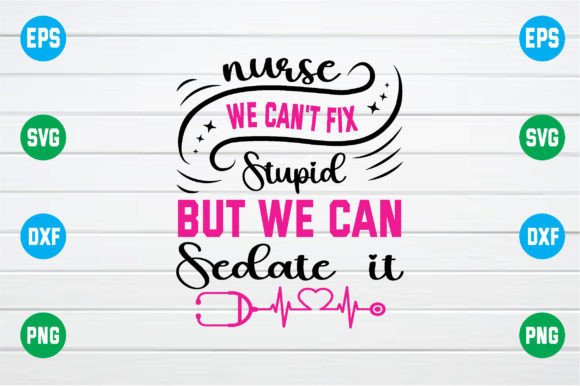
When the Nurse We Can't Fix Stupid but We Can Sedate It design landed on my screen, I immediately smiled. This isn't a timid, overly polite nursing graphic. It carries a confident, slightly sarcastic edge that nurses, techs, and anyone in healthcare will recognize instantly. The layout suggests a compact, readable phrase that works as a statement piece, and I could already picture it on a scrub cap, a zippered pouch, or a tote bag slung over a tired shoulder after a long shift.
As an embroidery product reviewer who digitizes and tests designs for real-world use, I wasn't looking at this as a novelty only. I was evaluating the shape, the phrase rhythm, the potential for clean stitch execution, and how it would hold up on actual products. The design is offered as a cutting file — an SVG compatible with software like Cricut and Silhouette — but I'm constantly asked if a graphic like this can be turned into a machine embroidery design. The answer is yes, with the right digitizing, and this one has strong bones for it.
Design Personality: Why This Works for Stitch-First Thinkers
The phrase Nurse We Can't Fix Stupid but We Can Sedate It hits a very specific cultural note. It's humorous, a little rebellious, and completely relatable to anyone who's worked a hospital floor. The design doesn't rely on complex illustration. Instead, it leans on typography and a tone of voice. For embroidery, that's often a good thing. Clean, well-spaced lettering can become a standout handmade product without fighting visual clutter.
I assessed the shape outline as if I were going to map it into a fill stitch or satin stitch combination. The text seems to have a natural horizontal flow, which means it will fit nicely across a chest placement on a sweatshirt or centered on a tote bag. There are no fragile, ultra-thin tails on the letters that would create registration nightmares. The overall mood feels like a gift that will make someone laugh, and that emotional reaction is exactly what boosts customer trust and repeat purchases in a craft business.
Practical Embroidery Testing: Visualizing the Stitch-Out
I always mentally stitch a design before I ever assign thread colors. For Nurse We Can't Fix Stupid but We Can Sedate It, I imagined a two-tone approach: a deep navy or charcoal for the main text, with a pop of surgical green or magenta on the word Sedate to create emphasis. This kind of selective color placement can elevate a custom apparel piece from a simple print to a professionally embroidered look.
On a tote bag design, the phrase feels right at home. A sturdy canvas base with a medium-weight cutaway stabilizer would support the satin stitch columns beautifully. I could see the design running about five inches wide, which fits comfortably in a 5x7 or larger hoop. The letter height is crucial — I'd want to avoid anything below 5mm for the smallest lowercase letters to prevent stitches from piling up and creating a lumpy, unreadable texture. If the SVG contains very tiny text, I'd simplify it in the digitizing stage to keep the stitch density manageable.
Where the Design Truly Shines: Real Project Applications
After testing the concept in my mind, these are the products where Nurse We Can't Fix Stupid but We Can Sedate It would feel like a natural fit:
- Scrub caps and headbands — a small, playful placement that doesn't overwhelm the garment.
- Embroidered patches — a standalone patch with a merrowed border, perfect for badge reels or jacket embellishments.
- Aprons — for a home cook who's also a nurse, the phrase becomes a kitchen conversation starter.
- Pillow covers — a humorous addition to a break room or a nurse's station lounge.
- Sweatshirt embroidery — left chest or center front, worked in a soft looped terry or French terry fabric.
- Tea towels — a holiday gift or retirement present that mixes practicality with personality.
Each of these uses taps into the finished product value. A buyer scrolling through an Etsy listing won't just see a design; they'll see a reflection of their own shared experience. That emotional hook is gold for Etsy sellers and small shop owners.
Fabric and Texture: Where You Need to Be Careful
Not every fabric is a friend to a text-heavy design. I'd advise caution when stitching Nurse We Can't Fix Stupid but We Can Sedate It on:
- Thin, stretchy fabrics like rayon-spandex blends. Without a no-show mesh stabilizer and careful hooping, the letters can distort and lose their crisp edges.
- Dark fabric with similar dark thread. The contrast will disappear. I always test a printable mockup in black and white to see if the design still reads.
- Curved surfaces like the side of a cap. The text baseline might arch awkwardly, so I'd recommend a flat placement or a specialized cap frame with precise alignment.
- Layered garments where the design lands on a seam. That can cause stitch gaps and broken threads.
I learned this the hard way with a similar phrase design on a baby onesie. The knit was too flimsy, and the satin stitches swallowed the lettering. For baby embroidery or any delicate item, a soft applique design approach — where the text is cut from a woven fabric and stitched down — can be a cleaner alternative.
Stitch Planning: Balancing Density and Readability
When I convert a cutting file like this into an embroidery file, I have to make decisions that the original graphic designer never had to think about. A running stitch might be too light for the main text; a satin stitch gives that glossy, professional finish but requires careful underlay. I'd likely use a tatami fill stitch for any bold, blocky lettering, combined with a satin border for definition. The kerning of the original SVG will affect how the letters sit next to each other. If the spacing is too tight, the stitches will blend together; too loose, and the phrase loses its cohesive rhythm.
Because the product description notes it's an instant download cutting file compatible with many different cutting software machines, I know the design is intended for vinyl and paper crafts. But embroidery designers can absolutely use it as a design asset for digitizing. I just need to check the SVG for overlapping paths, simplify nodes, and scale it to the correct hoop size. I always run a test stitch on scrap cotton with a medium-weight stabilizer before committing to the final product. That test reveals if the thread colors need adjusting, if the density is puckering the fabric, or if any tiny details — like the dot of an "i" — are getting lost.
Small Details That Matter for Professional Results
One thing I scrutinize: the apostrophe in "Can't" and the word "Sedate." If the SVG handles these with fine, pointed strokes, they might not translate well to embroidery. I often thicken delicate elements in the digitizing software to ensure they stitch out cleanly. The word "Sedate" is the punchline; it needs to be perfectly legible. If the lettering is too condensed, I'd adjust the width ratio to 110% so the threads have room to lay down smoothly.
For a commercial embroidery environment, where the design might be stitched dozens of times, I also plan the thread trims and color changes. A two-color version with a single stop is efficient. If I add a third color for a decorative accent, I factor in the extra production time. That's a practical consideration for anyone running a small shop product line.
Customer Reaction and Giftability: The Real-World Payoff
I've seen how a well-chosen phrase can transform a simple item into a personalized gift that people cherish. A nurse receiving a tote bag embroidered with Nurse We Can't Fix Stupid but We Can Sedate It isn't just getting a bag; they're getting a story, a laugh, and a recognition of their daily reality. That emotional connection increases the perceived value of the handmade product and encourages word-of-mouth promotion.
In a craft fair setting, this design would be the one that stops people mid-aisle. It's a bit cheeky, but not offensive. The design's readability is key — if the embroidery is crisp and the thread contrast is high, the humor lands instantly. If the stitching is muddled, the joke falls flat. So the quality of the digitizing directly impacts the buyer engagement and brand consistency for a maker.
Licensing and Commercial Use: What to Check Before You Sell
Because the file is a digital cutting file, the original licensing terms are important. I always advise anyone using Nurse We Can't Fix Stupid but We Can Sedate It as a basis for an embroidery design to confirm the commercial use rights. Can you convert it to an embroidery file and sell the stitched products? Can you sell the digitized embroidery file itself? These are questions that need clear answers before you list a patch or a custom apparel item on Etsy. The product description mentions it is an instant download cutting file compatible with many cutting machines, but it doesn't specify embroidery conversion rights. I recommend reaching out to the designer or checking the listing details to avoid any licensing missteps.
Final Practical Notes from the Embroidery Worktable
If you're planning to use Nurse We Can't Fix Stupid but We Can Sedate It for a real embroidery project, here's my checklist based on years of testing:
- Digitize from the SVG — don't just auto-trace. Manually assign stitch types and underlay.
- Test on scrap fabric that matches your final product's weight and texture.
- Check thread color contrast on both light and dark backgrounds. A dark navy thread on a black tote bag will disappear.
- Review stitch density after the first test. If the fabric puckers, reduce density by 10% and test again.
- Confirm hoop size — the design should not exceed the stitchable field of your chosen hoop.
- Inspect small details like the apostrophe and the dot of the "i" in "Fix." Enlarge if necessary.
- Use proper stabilizer — cutaway for knits, tear-away for wovens, and a water-soluble topper for textured fabrics like towels.
- Test in black and white mockups to ensure the design's silhouette still reads clearly.
- Compare light and dark fabric backgrounds — the design may need a slight outline for visibility on dark fabrics.
- Check whether the design works for both personal and commercial projects — and confirm licensing before selling finished items or digital embroidery files.
I've used similar phrase-based designs on countless projects, and what always separates a successful finished product from a disappointing one is this kind of methodical testing. Nurse We Can't Fix Stupid but We Can Sedate It has the personality and layout to become a best-selling embroidery piece, but only if you treat it as a starting point and invest the time in proper digitizing and stitch refinement.
For designers, Etsy sellers, and creative entrepreneurs who want to add a dose of humor to their embroidery project lineup, this design is a smart choice. It's the kind of digital embroidery file concept that, once digitized, fits seamlessly into a craft business arsenal. Whether you're making a sweatshirt embroidery for a nurse friend, a batch of holiday embroidery gifts, or a pillow cover for a boutique collection, the end result will carry the weight of a shared joke — and that's a powerful selling point.