EMT in Progress: A Design for Real-World Stitching
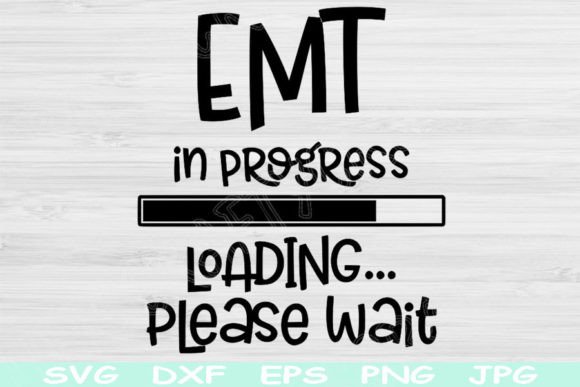
Let’s talk about the EMT in Progress Loading Please Wait Svg from a stitcher’s perspective. When I first opened this file, my immediate thought wasn't about its category—Graphics for Crafts—but about its mood. It’s clever. It has that modern, tech-inspired visual personality, but it's rooted in human care. The loading bar graphic combined with the text creates an instant narrative: dedication, patience, and a process underway. This isn't just a medical symbol; it's a story snippet, which is a fantastic starting point for any embroidery project.
Where This Design Finds Its Home
As a designer reviewing for real client work, I picture this on specific items. It has a clean, slightly graphic layout that would translate beautifully into embroidery. I immediately envision it on a high-quality cotton tote bag for an EMT student—a practical, daily-use item that carries meaning. On a heavyweight sweatshirt, it becomes a statement of pride, especially if you use a crisp satin stitch for the bar and a clean running stitch for the lettering. For a personalized gift, think of a nicely embroidered pillow cover for someone’s living space, or a durable apron. It has that blend of professionalism and personal touch that boutique shops and Etsy sellers look for.
The design also feels perfect for smaller, focused items. An embroidered patch, applied to a backpack or a work jacket, makes complete sense. On baby clothes? Perhaps not directly—the theme is specific—but on a blanket gifted to a new parent in the medical field, it becomes a heartfelt and unique tribute. Its clarity makes it a strong candidate for caps, though you’d need to be mindful of the curved surface and potentially simplify very small details.
Navigating the Practical Stitching Landscape
When you move from the digital file to the hoop, practical considerations come first. For a design like this, stitch clarity is paramount. The “loading please wait” text, especially if small, needs careful review. On a t-shirt or thin fabric, dense fill stitches in the progress bar could cause puckering without the right stabilizer. Always test on scrap fabric first—a piece of the same material you plan to use for the final product. This tells you everything.
Check thread color contrast rigorously. This design thrives on contrast. On a dark fabric, like a navy sweatshirt, using bright, opaque whites or vibrant blues for the bar will make it pop and maintain that tech-like feel. On light fabric, darker threads will define the graphic sharply. Before committing, create simple black and white mockups to see how the shapes read without color.
Be cautious with very small hoop sizes. If the design is scaled down significantly for a baby item or a tea towel corner, the finer details and lettering might lose definition and become a blur of stitches. It’s often better to use a slightly larger hoop and keep the elements distinct. For textured fabrics like towels or blankets, a simpler stitch type might be better than a complex fill to maintain visual appeal.
The Impact on Your Product and Your Customer
Using this embroidery file on a finished product affects more than just aesthetics. It builds a connection. For a customer, seeing “EMT in Progress” on a custom apparel item speaks to a journey. It creates recognition and respect. For your handmade presentation, a well-executed version of this design—with clean stitches, no loose threads, and good fabric pairing—signals quality and care, boosting customer trust and the perceived value of your work.
For small business merchandise, like items for a craft fair, it fills a niche. It’s a specific, meaningful design that might not appeal to everyone, but for its target audience, it’s perfect. This increases buyer engagement because it feels personal, not generic. As a gift, especially a holiday gift for a graduating EMT or a wedding gift for a medical professional couple, it’s highly giftable because of its tailored message.
From a brand consistency angle, if you’re an Etsy seller specializing in medical or service profession items, this machine embroidery design becomes a valuable asset in your digital product lineup. It helps you offer a cohesive range. However, its commercial use—selling the embroidered tote bags or patches—depends entirely on the licensing of the original digital file. You must confirm that before selling any finished product.
Final Designer Notes Before You Hoop It
My final thoughts, as if I’m preparing it for a client’s custom apparel order: This is a strong, concept-driven design. Its success in an embroidery project hinges on execution.
- Always test. Run it on a scrap piece of your intended fabric, even a simple run to check scale and detail integrity.
- Evaluate stitch density. Look at the progress bar graphic. If it’s a solid fill area, consider how it interacts with your fabric weight. A lighter fill or even an applique approach could be a creative alternative.
- Consider the end-use. For items that need frequent washing, like a shirt or kitchen towel, ensure your stitch choices and stabilizer use will withstand it.
- Check the basics. Confirm the hoop size needed for your desired output scale. Inspect the small details in your software before stitching. And most importantly, clearly understand the file’s license for personal versus commercial projects before you stitch anything for your small shop.
The EMT in Progress Loading Please Wait Svg has the potential to stitch up into something really special. It’s more than a graphic; it’s a badge of a process, and in the right hands, on the right fabric, it tells that story beautifully.