Nurse I Can Deal Trauma Not Drama: A Designer's Review
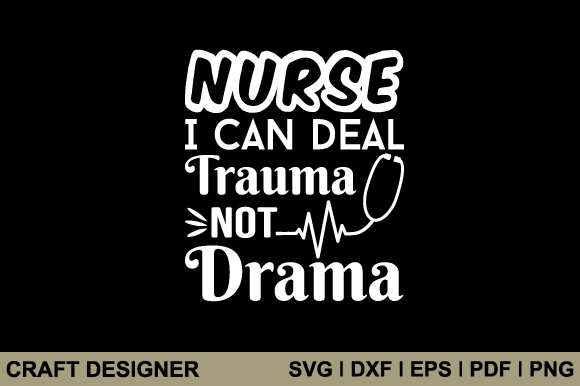
Let’s get straight to the point: I download embroidery files like this one all the time, and my first question is always, "Will this design actually work in a real project?" When I saw the title, Nurse I Can Deal Trauma Not Drama, I immediately thought of a specific client—a nursing supervisor who wanted custom gifts for her team. This isn’t just a funny phrase; it’s a badge of honor, and the design needs to stitch out like one.
The First Impression: Personality & Practicality
This design has a clear, confident mood. It’s bold and humorous, perfect for the strong personality of many healthcare workers. The layout feels balanced, with the text being the star. As a graphics file meant for embroidery conversion, the included formats—SVG, DXF, EPS, PDF, PNG—are a solid starting point. This means I can easily scale and adapt it for different hoop sizes without losing quality, which is crucial. The visual personality is direct and uncluttered, which translates well to stitch.
My mind goes straight to a classic embroidered sweatshirt or a sturdy tote bag. These are items that can handle the stitch density and that the recipient will actually use daily. It wouldn’t feel right on a delicate baby item, but on a nurse’s apron or a patch for her bag? Absolutely.
Where This Design Finds Its Home
In real-life embroidery, this design naturally belongs to products with a bit of substance. I’m thinking of:
- Custom apparel for healthcare teams or graduates.
- Sturdy tote bags for nurses on the go.
- A well-placed embroidery on a cap or hat.
- A simple, clean patch that can be ironed or sewn onto a uniform bag.
- Pillow covers or kitchen towels as a gift for a nurse friend.
- Holiday gifts that acknowledge someone’s tough profession with a touch of humor.
For Etsy sellers or small shop owners, this design is a ready-made product idea. It taps into a specific, appreciative audience. The finished product value isn’t about extravagant detail; it’s about relevance and recognition.
Navigating the Stitching Terrain: A Few Caveats
Here’s where practical judgment comes in. While the design is straightforward, embroidery always has its nuances.
The lettering will be the critical element. On a real project, you need to ensure the stitch density for the text is appropriate so it reads clearly, especially on textured fabrics like sweatshirt material. I would never run this on a small hoop size for a t-shirt without testing first—thin or stretchy fabric could make those letters pucker or lose clarity.
Dark fabric is a classic choice for this kind of bold statement, but that means your thread color contrast is vital. A bright, clean white or a vibrant color will make it pop. On curved surfaces like caps, the layout needs to be adjusted so the text doesn’t distort at the edges.
This isn’t a design with tiny, intricate details, which is a plus. However, always check the small details in your embroidery software before stitching—corners of letters and the spaces between them need to stitch out cleanly. For products that need frequent washing, like apparel, using a good stabilizer and a robust stitch type (like a solid satin stitch for the letters if converted) will ensure longevity.
The Impact on Your Project & Your Customer
Using Nurse I Can Deal Trauma Not Drama effectively boosts visual appeal through its message more than its complexity. The stitching clarity is paramount; a clean, professional embroidered result builds customer trust and makes the handmade presentation feel intentional and high-quality.
For a craft business, this kind of design offers strong giftability and instant recognition. It feels personal and professional at the same time. When a customer sees this on a finished product, they engage with the sentiment first, which is a powerful driver for sales in niches like healthcare appreciation gifts.
Practical Notes From the Hoop
Before you commit this design to a client’s sweatshirt or your next batch of boutique merchandise, here’s my standard checklist:
- Test on scrap fabric first. Use the same material you plan for the final product. This tells you everything about stitch density and thread behavior.
- Review the design in black and white mockups on both light and dark backgrounds in your software. This helps visualize contrast.
- Confirm your hoop size can accommodate the design at the scale you want, with enough margin for stabilizer.
- Check the licensing for this digital embroidery file. The product description doesn’t specify commercial use, so it’s imperative to confirm before selling finished items or using it in commercial embroidery projects.
- For personal gifts, it’s a fantastic, quick-to-implement idea. For a small business product line, it fits neatly into a niche collection.
The beauty of a design like this is its straightforward application. It doesn’t require exotic thread colors or special techniques. It asks for a clean conversion from the provided graphics files, sensible fabric choice, and an understanding of who will wear or use it. That nurse, that friend, that graduate—they’ll see the humor and the respect stitched into it, and that’s the real measure of a successful embroidery project.
A Final, Real-World Scenario
Imagine you’re preparing a custom embroidered tote bag for a nurse’s birthday. You choose a durable canvas, convert the SVG file, and select a strong royal blue thread for the text. You stitch it out. The result is a bold, readable statement that doesn’t fray at the edges. It’s not overly dense, so the bag remains flexible. The recipient doesn’t just see a cute bag; she sees a testament to her daily reality, made tangible. That’s the practical power of this design—it bridges a digital file to a real, appreciated object. That’s what we’re always looking for.